Puppy Love (2023): A Director's Lesson in Character Mechanics

Jul 27
2 min read
Updated: Aug 18
I hit play on Puppy Love expecting low-stakes streaming filler—a lightweight, paint-by-numbers rom-com wrapped in studio polish and cute dogs.
I didn't expect to sit there taking notes on its character mechanics.

As a director, I constantly fight a specific problem on page one: how do you trap two opposing forces in the same physical space without breaking audience logic? When two characters clash immediately, human instinct kicks in. Why don't they just walk away?
Directors Nick Fabiano and Richard Alan Reid solved it not through clever banter, but by shifting the physical burden onto two animals.
The Anchor: Forced Proximity Through Physical Mechanics
The setup wastes zero time establishing its extremes:
Max (Grant Gustin): Socially paralyzed, hyper-controlled, living behind a wall of germaphobia and rigid routine.


Nicole (Lucy Hale): A chaotic, commitment-phobic mess living in temporary spaces and running on self-sabotage.
Their initial Bumble date collapses into a disaster of ghost-pepper chicken and defensive walls. They part ways, fully intending to never see each other again.
Then the physical mechanics intervene. While the humans argue in the park, their dogs mate.
An unwanted canine pregnancy forces two people who detest each other into a mandatory co-parenting arrangement. Neither character can walk away without feeling ethically bankrupt.
The Takeaway: When your characters want to run, build an external, physical anchor they can’t abandon without losing their humanity.
Directing Contrast: Frame, Spatial Intrusion, and Clutter
Where the film actually earns its keep is in spatial contrast. The comedy works because the directing grounds the conflict in physical behavior rather than endless dialogue:
Max’s Frame: Symmetrical, sanitized, controlled. Every object sits at a right angle.
Nicole’s Frame: Temporary staging props, unwashed dishes, unannounced visits, and total disregard for boundary lines.
When Nicole moves her dog’s gear—and eventually herself—into Max's apartment to monitor the expectant dogs, the camera treats her presence like an invading force. Every piece of staging decor tossed onto a chair and every unwashed plate directly triggers Max's internal sensory system.

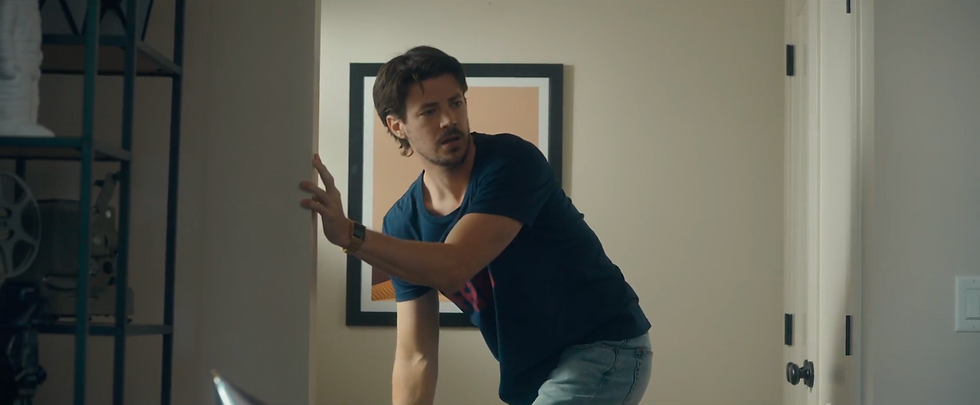
It’s a sharp reminder of core staging: let the environment and spatial intrusion drive the scene long before the characters start yelling.
The Shift: Vulnerability Over Perfection
Where standard rom-coms crash is in Act Three, when characters magically rewrite their personalities overnight. Puppy Love handles its turn through small, believable beats:
Nicole strips away Max's self-imposed isolation, pushing him back out into an actual office environment.
Max recognizes Nicole’s hidden artistic talent, quietly submitting her portfolio when her own self-doubt freezes her up.
By the time the litter arrives, neither character is "cured." Max is still hyper-particular; Nicole is still messy. But they've expanded their capacity to tolerate each other's noise.

That’s the real takeaway for any storyteller: don't try to fix your characters' flaws to give them a happy ending—give them a reason to let someone else see them.
Follow My Journey
IG: @iwatasam
IMDb: imdb.me/sam


Comments